For developers and engineers, partnering with a specialized Robotics Precision Components Manufacturer is the key to bridging the gap between sophisticated AI software and durable physical forms. CNC Machining for Robotics stands at the forefront of this hardware revolution, providing the repeatability and material versatility that the industry demands.
The rapid evolution of artificial intelligence and autonomous systems has placed unprecedented demands on the physical infrastructure that houses these digital brains. As robots transition from controlled factory floors to complex, real-world environments, the need for high-performance mechanical frameworks has never been greater. For any developer in this space, partnering with a specialized Robotics Precision Components Manufacturer is no longer just a supply chain decision, but a strategic technical requirement. CNC machining stands at the forefront of this hardware revolution, providing the necessary bridge between sophisticated AI software and the durable, precise physical forms required to execute complex tasks.
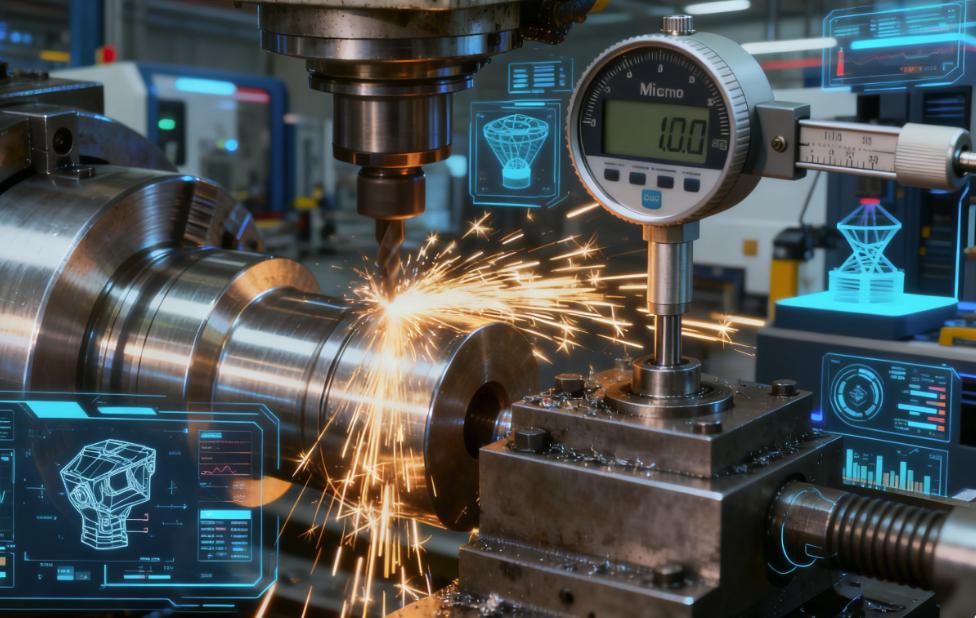
Optimizing Design for Robotic Agility and AI Integration
In the realm of robotics, design is dictated by kinematics and sensor integration. Engineers must balance structural rigidity with the need to minimize inertial mass to ensure agility.
1. Achieving Complex Geometries
Modern CNC Machining for Robotics allows for the creation of complex geometries that accommodate internal cable routing, sensor pockets, and integrated cooling channels essential for high-draw AI processors.
2. Modularity and Part Consolidation
Using multi-axis machining capabilities—specifically 4-axis and 5-axis configurations—manufacturers can produce consolidated parts that previously required multiple components.
- Reduced Failure Points: Minimizing the “part count” simplifies assembly and removes risks like loose bolts or misaligned joints.
- Project Feasibility Analysis: Leading partners leverage years of case data to advise on simplifying designs without sacrificing performance, ensuring a seamless transition from CAD to prototype.
Advanced Materials: Balancing Strength, Weight, and Thermal Conductivity
Material selection is perhaps the most influential factor in the longevity of AI hardware. In robotics, every gram of weight saved translates directly into battery life or payload capacity. Consequently, the industry has gravitated toward a specific suite of high-performance materials:
- Aluminum Alloys (6061 és 7075): These remain the gold standard for robotic frames and heat sinks. They offer an excellent strength-to-weight ratio and superior thermal conductivity, which is essential for cooling AI edge computing hardware.
- Stainless Steel (304 és 316): Employed in medical robotics or food-processing automation where corrosion resistance and sterilization are paramount.
- Titanium: Reserved for high-end aerospace or specialized limb prosthetics where maximum strength and biocompatibility are required, despite the increased machining complexity.
- Engineered Plastics (PEEK and Delrin): Used for gears or insulating components where low friction and non-conductivity are necessary.
The procurement process is just as vital as the machining itself. Leading service providers often maintain an extensive supplier network to ensure material purity and traceability. With over 15 years of experience in operation management and material purchasing, industry leaders like Dióda megmunkálás ensure that the raw materials meet international standards such as ISO9001-2015, providing a foundation of reliability before the first cut is even made.
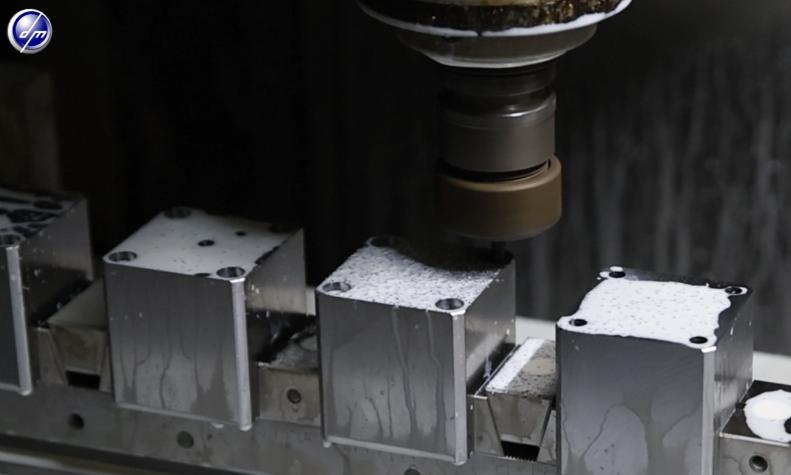
Design for Manufacturing (DFM) Tips for Robotics
Applying DFM principles early in the design phase can significantly reduce production costs and lead times. For AI hardware, where iterations are frequent, these tips are essential:
1. Standardize Tooling and Radii
Designers should avoid deep, narrow slots or sharp internal corners that require specialized, fragile tooling. Utilizing standard end-mill diameters for internal pockets ensures faster material removal and better surface finishes. If an internal sharp corner is required for a sensor fit, consider “dog-bone” fillets to allow for tool clearance.
2. Simplify Setup and Workholding
A major cost driver in CNC machining is the number of times a part must be repositioned. By designing parts that can be machined in fewer setups—or by utilizing 5-axis machines—you minimize the risk of stack-up errors and reduce labor costs. This is particularly important when moving from the prototyping phase to mass production.
3. Consider Tolerance Sensitivities
While CNC Machining for Robotics can achieve micron-level accuracy, focus tight tolerances only on critical mating surfaces (like bearing housings) while allowing more relaxed tolerances on structural shells.
4. Bridging the “Verification Gap” for High-Precision Hardware
A significant but often overlooked pain point in robotics manufacturing is the validation barrier. While a robotic limb or an AI sensor housing may be designed with micron-level tolerances, verifying those dimensions often requires specialized, high-cost testing equipment that many developers do not have in-house.
To eliminate this uncertainty, a reliable partner must offer more than just cutting and milling. At Diode Machining, we bridge this gap by integrating inspection strategy support into our DFM process. If a project requires specific performance testing or specialized metrology tools that are not readily available, we act as a technical facilitator—either by procuring the necessary custom gauges and equipment on behalf of the client or by coordinating with certified third-party laboratories for independent validation. By ensuring that “precision” is backed by verifiable data rather than just an engineering assumption, we allow our clients to focus on AI software development while we handle the heavy capital expenditure and technical rigor of hardware verification.
Engineering Excellence: From Prototype to Mass Production
The transition from concept to a market-ready robotic product requires an integrated approach. Strategic locations within precision machining hubs allow top-tier firms to utilize value-added services, including advanced surface treatments (anodizing, PVD coating) and full assembly.
Modern facilities equipped with over 50 sets of CNC machines provide the “full order capacity” needed to scale. For global clients in the US, Europe, and Australia, this consistency builds a trusted partnership. By providing project feasibility analysis and cost optimization based on historical data, manufacturers help AI startups and industrial giants alike refine their hardware for the global market.
The synergy between CNC Machining for Robotics and the AI sector is defining the next generation of technology. By focusing on smart design, meticulous material selection, and rigorous DFM practices, companies can create hardware that is functional, scalable, and robust.
For more information on professional CNC solutions and mechanical design services, visit: https://diodemachining.com/