The landscape of modern precision manufacturing is undergoing a significant transformation driven by the demand for tighter tolerances and increasingly intricate geometries. 다이오드 가공, a prominent 5-axis CNC Machining Specialist, has emerged as a key player in this evolution. Based in the heart of a premier precision machining hub, the company leverages over 15 years of operational expertise to bridge the gap between complex mechanical design and high-volume production. By integrating advanced multi-axis technology with ISO 9001:2015-certified quality protocols, the organization provides a robust framework for global industries requiring seamless transitions from initial prototyping to market-ready assembly.
Understanding the Mechanics of 5-Axis CNC Machining Technology
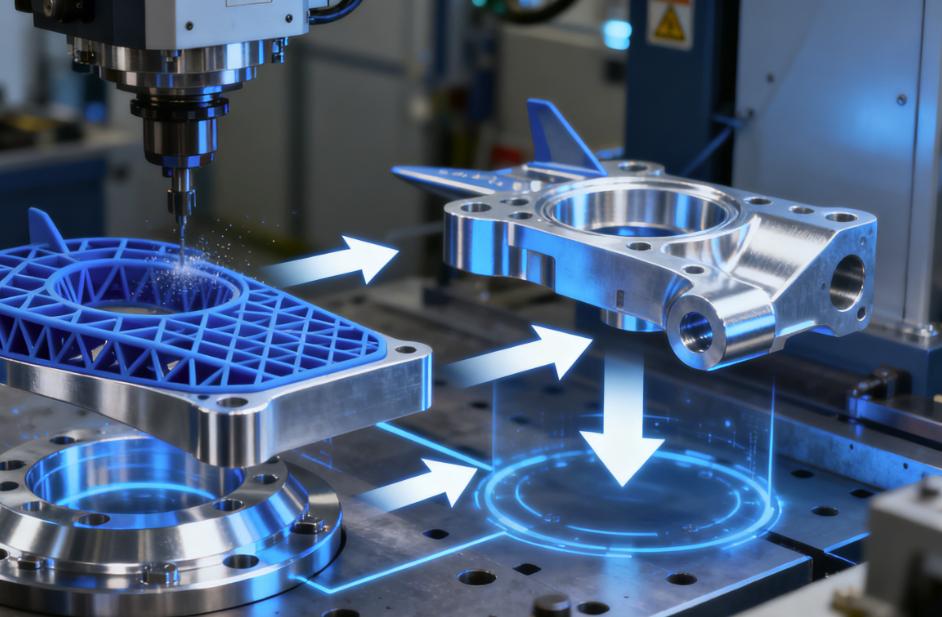
핵심, 5-axis machining represents the pinnacle of subtractive manufacturing. Unlike traditional 3-axis systems that move a part along the X, Y, and Z linear axes, 5-axis CNC Machining introduce two additional rotational axes. This allows the cutting tool to approach the workpiece from virtually any direction, enabling the creation of complex shapes that would be impossible or commercially unviable using simpler equipment.
For a manufacturer like Diode, which operates more than 50 sets of CNC machines across 6,000 square feet of production space, the adoption of 5-axis technology is not merely a technical upgrade but a strategic necessity. The capability to manipulate a part across five planes simultaneously reduces the need for multiple setups, which is often the primary source of dimensional error in precision engineering.
I. Technical Capabilities and Material Versatility
The technical prowess of 5-axis machining is best measured by its ability to handle a diverse range of substrates while maintaining extreme accuracy. Diode’s engineering team utilizes large-scale data from similar historical cases to optimize production costs and feasibility from the earliest design stages.
Precision Across Diverse Materials
Modern applications demand materials that offer specific strength-to-weight ratios or thermal resistance. The 5-axis CNC Machining process excels in processing:
- Lightweight Alloys: Aluminum 6061, 7075, and Titanium, frequently used in aerospace and automotive sectors.
- High-Durability Steels: Stainless steel 304 그리고 316, along with various tool steels.
- Engineering Plastics: PEEK, 델린, and Polycarbonate for medical and electronic housing.
By utilizing high-speed spindles and specialized tooling, the 5-axis CNC Machining process ensures that even the most stubborn materials are shaped with a surface finish that often eliminates the need for secondary polishing. This is particularly critical in rapid prototyping, where speed and fidelity to the original CAD model are paramount.
Advanced Geometries
The primary capability of 5-axis machining lies in “under-cutting” and deep cavity milling. In traditional machining, reaching deep or angled pockets requires long, vibrating tools that compromise accuracy. 5-axis machines tilt the part or the head, allowing for shorter, more rigid cutting tools that maintain higher speeds and feed rates, resulting in tolerances often measured in microns.
II. Strategic Benefits: Efficiency and Quality Control
The transition from 3-axis to 5-axis machining offers several structural advantages that directly impact a project’s bottom line and technical integrity.
Reduced Setup Times and Enhanced Accuracy
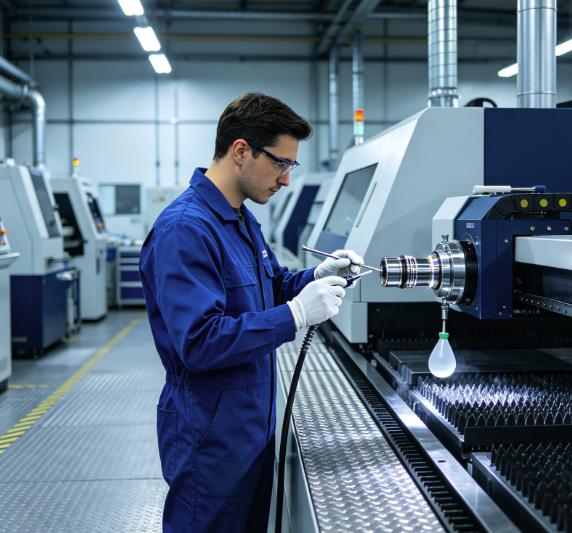
In conventional machining, complex parts often require five or more separate setups to reach every face. Each time a technician moves a part, there is a risk of misalignment. 5-axis machining follows the “Done-in-One” philosophy. By finishing the majority of a part in a single clamping operation, the cumulative error from manual handling is virtually eliminated. This efficiency allows Diode to maintain a full order capacity while supporting clients in over 30 countries, including highly regulated markets in Europe and North America.
Improved Surface Finish and Tool Life
When a tool can be oriented to maintain the optimal cutting angle (the point of contact) relative to the part’s contour, the “scallop” marks left by the cutter are minimized. This results in a superior surface finish. Furthermore, avoiding the tip of the tool—where the cutting speed is effectively zero—and instead using the side of the tool leads to more uniform wear, extending the life of expensive carbide inserts and reducing downtime.
Cost Optimization via Case Data
Leveraging 15 years of production data, engineers can perform detailed feasibility analyses. This ensures that the 5-axis path is not just technically possible but also economically optimized. By analyzing similar case data, the team can suggest material substitutions or design tweaks that reduce cycle times without compromising the functional intent of the component.
III. Applications in Complex Part Manufacturing
The versatility of 5-axis CNC machining finds its most significant value in industries where failure is not an option and design complexity is a prerequisite for performance.
Aerospace and Defense
Components such as turbine blades, impellers, and structural airframe parts feature organic, non-linear surfaces. 5-axis machining is the only method capable of following these continuous curves with the precision required for aerodynamic efficiency. The ability to machine these from solid billets ensures structural integrity superior to cast or welded alternatives.
Medical Device Engineering
The medical industry requires biocompatible materials machined into incredibly small, intricate shapes—such as orthopedic implants or surgical instruments. These parts often feature compound curves that must match human anatomy. The precision afforded by ISO 9001-certified processes ensures that every batch meets the stringent safety standards required for clinical use.
Automotive and Industrial Energy
From high-performance engine blocks to complex housings for renewable energy systems, the demand for custom mechanical design is rising. Diode’s extensive supplier network and integrated assembly services allow for the production of multifaceted cooling manifolds and transmission components that require internal channels and angled bores, all finished to exacting specifications.
IV. Technical Innovation and Future-Proofing Production
As global supply chains become more complex, the role of a precision manufacturing partner extends beyond simple machining. It involves comprehensive value-added services, including product development and rigorous quality control.
The integration of 5-axis technology with digital twin software allows engineers to simulate the entire machining process before a single chip of metal is cut. This preemptive analysis identifies potential collisions or axis-limit issues, ensuring that the transition from a digital design to a physical product is seamless. This level of technical innovation is what allows manufacturers to offer competitive pricing while maintaining the flexibility to handle both low-volume prototypes and high-volume mass production.
Furthermore, the strategic location within a precision machining hub provides access to specialized post-processing services—such as anodizing, heat treatment, and specialized coatings—enabling a true end-to-end solution. This ecosystem ensures that the final product not only meets dimensional requirements but also the environmental and durability standards demanded by the global market.
결론
The shift toward more complex part requirements is a permanent fixture of the modern industrial economy. 5-axis CNC machining stands as the definitive solution for overcoming the limitations of traditional manufacturing, offering a path to greater precision, reduced lead times, and enhanced design freedom. By combining advanced machinery with a deep reservoir of engineering experience and a commitment to certified quality standards, professional providers ensure that global clients can navigate the challenges of modern engineering with confidence.
As industries continue to push the boundaries of what is possible, the synergy between expert mechanical design and multi-axis manufacturing will remain the cornerstone of technological progress.
For more information on precision solutions and technical capabilities, visit: https://diodemachining.com/
알루미늄은 용접하기 까다로운 재료입니다.. Tuofa는 알루미늄 용접에 대한 경험과 적절한 장비를 갖춘 숙련된 용접공을 보유하고 있습니다., 경량 알루미늄 부품까지, 소매 선반 포함, 캐비닛, 전기 박스 및 지지 프레임워크.
마감 서비스를 제공할 수 있나요??
예. 많은 고객이 외부 공급업체와의 훌륭한 관계를 활용하여 아노다이징과 같은 마감 서비스를 제공합니다., 패시베이션, 도금, 세련, 연마, 그리고 열처리.
예. PVC를 정기적으로 가공하고 있습니다., 몰래 엿보다, 테프론, 델린, 조달청, PDFE 및 기타.
복합재료를 가공할 수 있나요??
우리는 대부분의 탄소섬유 복합재를 가공할 수 있습니다., 하지만 특별한 툴링이 필요합니다, 올바른 피드와 속도를 설정하려면 각각의 새 부품에 대해 실험을 수행해야 합니다..
.CNC 가공 공정이란 무엇입니까??
CNC 가공의 과정은 미리 프로그래밍된 소프트웨어에 의해 가공 공구의 작동이 자동화되는 과정입니다.. CNC는 "Computer Numerical Control"의 약자로,, 속도와 같은 복잡한 가공 및 공구 이동, 조정, 부품이 기계에 공급되는 속도는 모두 소프트웨어에 의해 제어됩니다.. CAD 전문가가 CAD 프로그램에서 부품을 설계하고 작성하면 작업자가 아닌 기계가 반복적인 동작을 수행하므로 일관되고 정밀한 부품 생산이 가능합니다..
우리는 모든 종류의 테스트 인증서를 제공할 수 있습니다., 재료 및 치수 검사, 등.
대개, 디자인 도면이나 원본 샘플을 기반으로, 우리는 몇 가지 기술적 제안을 제공합니다
그리고 당신에게 전하는 인용문, 당신의 동의 후, 우리는 당신을 위해 생산.