For product designers, engineers, and hardware startups, the transition from a 3D CAD model to a tangible, physical product can feel like a high-stakes leap of faith. In the realm of sheet metal fabrication, this transition is particularly critical. A single misplaced bend radius or an overlooked material tolerance can result in thousands of dollars of wasted material and weeks of production delays.
This is where specialized sheet metal prototyping services come into play. Far from being just an optional middle step, prototyping is a strategic gatekeeper that ensures design viability, minimizes financial risk, and accelerates time-to-market.
Here is an in-depth look at how professional prototyping services transform the custom sheet metal fabrication workflow, and why skipping this phase is a luxury your bottom line cannot afford.
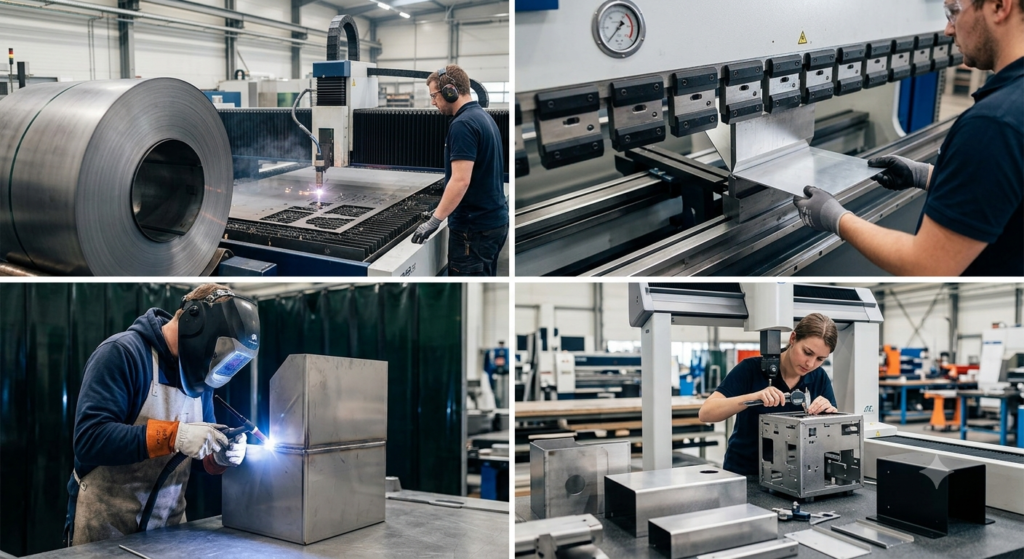
The Complexities of Sheet Metal Engineering
To understand the value of a prototype, one must first appreciate the unique mechanics of sheet metal. Unlike CNC machining, which subtracts material from a solid block, or 3D printing, which adds material layer by layer, sheet metal fabrication relies on deforming, cutting, and shaping flat sheets of metal.
When sheet metal is bent, the material on the outside of the bend stretches, while the material on the inside compresses. This physical reality introduces variables that software simulations cannot always perfectly predict:
- The K-Factor and Bend Allowance: The exact position of the neutral axis where no material deformation occurs.
- Material Springback: The tendency of metal to slightly return to its original flat shape after the bending force is released.
- Torn Metal Risks: Cracks or structural failures that occur if a bend is placed too close to a cut hole or an edge.
Because different alloys—such as 6061 aluminum, 304 stainless steel, or cold-rolled steel—behave differently under mechanical stress, a physical prototype is the only definitive way to validate your engineering assumptions before committing to high-volume hard tooling.
Key Benefits of Sheet Metal Prototyping Services
1. Cost Mitigation and Design for Manufacturing (DFM) Analysis
The further a design progresses along the production pipeline, the more expensive it becomes to correct an error. A mistake caught during the 3D modeling stage costs virtually nothing. A mistake caught during prototyping costs a few hundred dollars. A mistake caught after hard stamping dies have been machined can cost tens of thousands of dollars and derail an entire product launch.
Experienced rapid prototyping services do not just follow your blueprints blindly. They subject your design to rigorous DFM (Design for Manufacturing) reviews. They check whether your specified tolerances are realistic, if your choice of hardware (such as PEM fasteners) aligns with the material thickness, and whether the design can be fabricated using standard, cost-effective tooling rather than complex custom setups.
2. Rapid Iteration Without Hard Tooling
Traditional mass production of sheet metal components often relies on hard tooling, such as progressive stamping dies. While incredibly efficient for creating millions of identical parts, these dies are rigid, incredibly expensive, and take weeks or months to manufacture.
Prototyping services bypass this bottleneck by utilizing soft tooling and flexible manufacturing technologies:
- CNC Laser Cutting: Offers high-speed, precision cutting of complex profiles without the need for custom stamps.
- CNC Hydraulic Press Brakes: Programmed digitally to execute precise angles and multi-bend sequences using universal die sets.
This allows engineers to test “Version A,” identify a flaw, update the CAD file, and have “Version B” fabricated within a matter of days.
3. Functional and Environmental Testing
A software rendering cannot tell you how a sheet metal enclosure will resonate under vibration, how effectively it will shield electromagnetic interference (EMI), or how its powder-coated finish will withstand harsh outdoor environments.
Physical prototypes allow you to perform physical stress tests, thermal cycle evaluations, and fit-form-function assemblies with mating components like PCBs, wiring harnesses, and cooling fans.
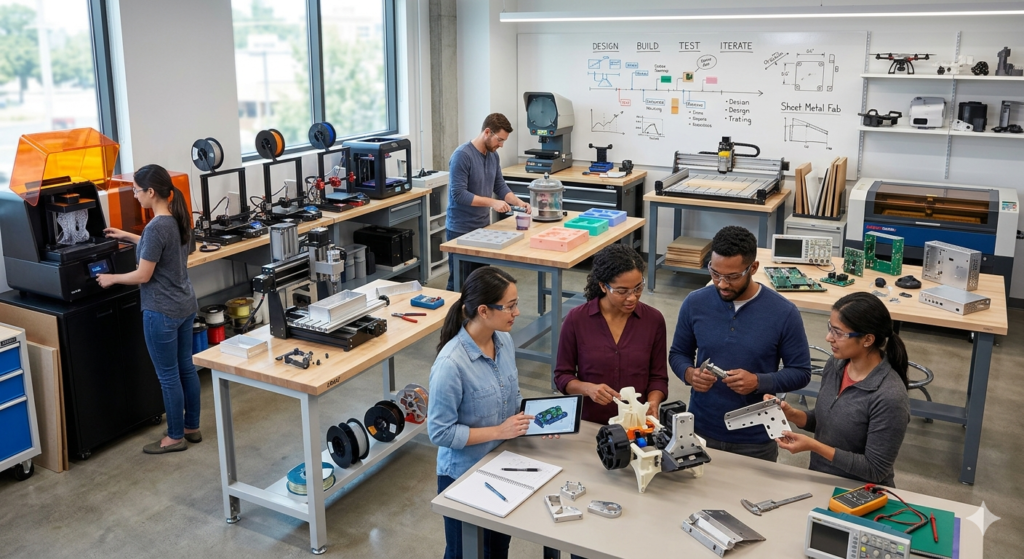
Choosing the Right Prototyping Technologies
Depending on your project’s specific requirements, a prototype manufacturer may employ several different fabrication techniques to bring your concept to life.
| Technology | Best Used For | Key Advantage |
| Laser Cutting | Intricate flat profiles, bracket outlines, and chassis blanks. | Extremely tight tolerances, no tooling costs, smooth edges. |
| CNC Punching | Parts with high-density hole patterns, louvers, or embossments. | Cost-effective for repetitive geometric features. |
| Precision Bending | Creating enclosures, U-channels, and complex 3D structures. | Accurately accommodates material-specific springback variables. |
| Robotic/Manual Welding | Joining seams in heavy-duty brackets or sealed enclosures (TIG/MIG). | Maximum structural integrity for structural enclosures. |
From Rapid Prototype to Low-Volume Production
One of the greatest hidden advantages of partnering with a dedicated sheet metal fabricator for your prototypes is the seamless path it creates toward scaling up.
When your prototype is finalized, the manufacturing data, exact bend deductions, and tooling configurations are already logged into the fabricator’s system. This means transitioning from a single prototype to a low-volume production run of 100 para 1,000 units requires no friction. The lessons learned during the prototyping phase directly inform the quality control parameters of the production run, ensuring consistent quality, predictable lead times, and lower per-unit costs.
Conclusion: Safeguard Your Supply Chain Early
In modern industrial product development, speed is a competitive advantage, but speed without precision leads to catastrophic failure. Relying solely on digital simulations is a gamble that rarely pays off when dealing with the physical realities of metal forming.
By leveraging professional sheet metal prototyping services, you effectively de-risk your hardware project. You gain the freedom to innovate, iterate, and refine your designs rapidly, ensuring that when you finally pull the trigger on mass production, your product will perform exactly as engineered.
Are you looking to transition your custom sheet metal design from a concept into a production-ready component? Contact our engineering team today to receive a comprehensive DFM review and an expedited quote on your next rapid prototyping project.