The Shifting Economic Landscape
This 2026 Guide explores the evolving dynamics of the industry, specifically examining how a CNC Machining Outsourcing Manufacturer from China stacks up against United States-based facilities. As supply chains stabilize and technology levels the playing field, understanding the specific trade-offs in cost, quality, and lead times is essential for maintaining a competitive edge in complex project analysis and custom mechanical design.
Historically, the primary driver for outsourcing to China was pure labor arbitrage. However, in 2026, the “China Cost” has matured into a more sophisticated value proposition. While US-based machining shops face rising overheads driven by high energy costs and a shortage of skilled labor, Chinese manufacturers have counteracted their own rising labor rates through massive investments in automation and integrated supply chains.
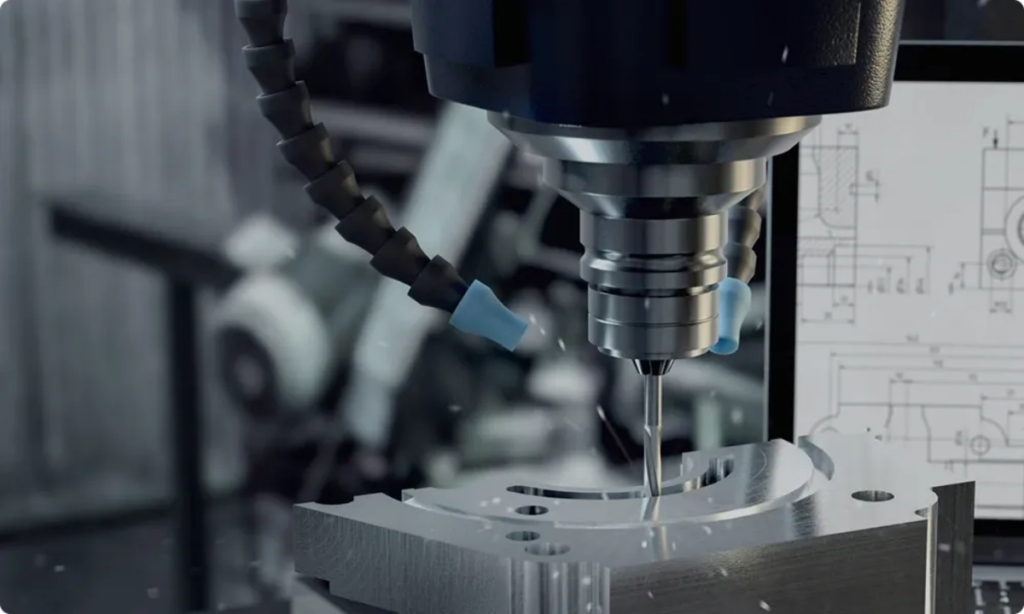
1. CNC Machining Costs
Cost optimization in the modern era is no longer just about the hourly rate of the machine. It involves project feasibility analysis and production cost optimization backed by extensive case data. For instance, a provider like Prelucrare cu diode leverages over 15 years of operational management experience to streamline material purchasing. By operating within a precision machining hub, manufacturers can tap into an extensive supplier network that reduces the cost of raw materials—from aerospace-grade aluminum to specialized medical plastics—often at a fraction of the price found in North American markets.
In the US, CNC machining often carries a premium due to localized regulatory compliance and higher logistical costs for raw materials. For low-volume prototyping, the price gap might be narrow, but as projects scale toward mass production, the cumulative savings on tooling and multi-axis setups in China typically range from 30% la 50%, even when factoring in trans-Pacific logistics.
2. Quality Standards and Technical Integration
A common misconception in the past decade was that domestic US machining inherently guaranteed superior quality. By 2026, this gap has largely closed due to the global standardization of hardware and quality management systems. Modern facilities in both regions utilize identical high-end equipment, such as 3-axis, 4-axă, and 5-axis CNC machines capable of achieving tolerances within microns.
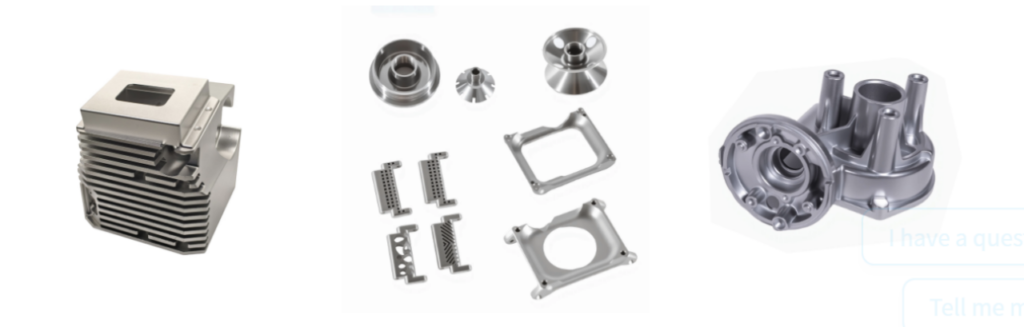
The real differentiator in quality now lies in the certification and the engineering team’s expertise. ISO9001:2015-certified quality control has become a baseline requirement for international exports. Technical proficiency is demonstrated through the ability to handle complex geometries and challenging materials. High-precision fabrication today often involves intricate components for EV charging systems, aerospace housing, and advanced robotics where structural integrity is non-negotiable.
Chinese manufacturers have shifted their focus toward “seamless solutions,” integrating product development with rigorous quality checks. The use of advanced machinery combined with an experienced engineering team allows for the execution of complex project analyses. This ensures that the final product does not just meet the blueprint specifications but is also optimized for its intended mechanical application. Whether it is custom CNC fabrication involving complex milling or high-speed turning, the focus has shifted from “making it cheap” la “making it right the first time.”
3. Lead Time Comparison: Speed to Market vs. Logistics
In the rapid prototyping phase, lead time is often the most critical factor. US-based shops hold a natural advantage for domestic clients when a 24-hour turnaround is required for a single iteration. The elimination of international shipping and customs clearance can save several days in the early R&D stages.
Conversely, the “China speed” remains a formidable force in the mid-to-late stages of product development. The sheer capacity of large-scale manufacturing hubs allows for 24/7 operation cycles that many smaller US shops cannot sustain. A facility with over 50 sets of CNC machines and 6,000 square feet of dedicated space can often move from a finalized design to a completed batch of 1,000 units faster than a domestic shop restricted by labor shifts and machine availability.
Furthermore, the integration of assembly services provides an additional lead-time advantage. When a manufacturer can handle machining, design mecanic personalizat, and final assembly under one roof, it eliminates the “transit lag” between different subcontractors. In 2026, the logistical hurdle of shipping to 30 countries worldwide has been mitigated by improved digital tracking and streamlined customs protocols, making the actual delivery difference often as little as 3 la 5 days for air-freight components.
4. Strategic Inventory Management: Mitigating High Part Costs
A critical but often overlooked pain point in the 2026 CNC market is the volatility of component pricing and the heavy financial burden of inventory holding. For many international clients, specialized custom parts—particularly those requiring exotic alloys or complex multi-stage machining—carry high individual unit costs. Maintaining a safety stock in domestic US warehouses often leads to significant capital tie-up and warehouse overhead.
To address this, leading Chinese manufacturers have transitioned from simple “make-to-order” shops into strategic supply chain partners. By leveraging extensive facility space and robust operational data, companies like Diode Machining offer strategic inventory buffering. We enable clients to lock in lower high-volume pricing while we manage the physical storage of critical components. By “stockpiling” completed parts and releasing them on a scheduled or JIT (Just-In-Time) basis, we effectively help our partners hedge against raw material price fluctuations and eliminate the immediate financial strain of bulk procurement. This model transforms a high-cost procurement hurdle into a predictable, manageable operational expense.
Conclusion: Balancing the Scales for 2026
The choice between US and China CNC machining in 2026 is rarely an “either/or” scenario but rather a strategic alignment of project needs. The US remains a powerhouse for highly sensitive, localized, or ultra-rapid iterations. However, for companies seeking a combination of competitive pricing, full-scale production capacity, and high-level engineering support, China’s precision machining sector offers a compelling, comprehensive solution.
By combining advanced multi-axis machinery with an extensive supplier network and certified quality protocols, Chinese manufacturers provide the value-added services necessary to enhance a client’s own internal capabilities. As we navigate the complexities of global trade, the focus remains on finding a manufacturing partner that can support a product’s journey from the first digital design to global distribution.
For more information on precision manufacturing solutions, visit: https://diodemachining.com/