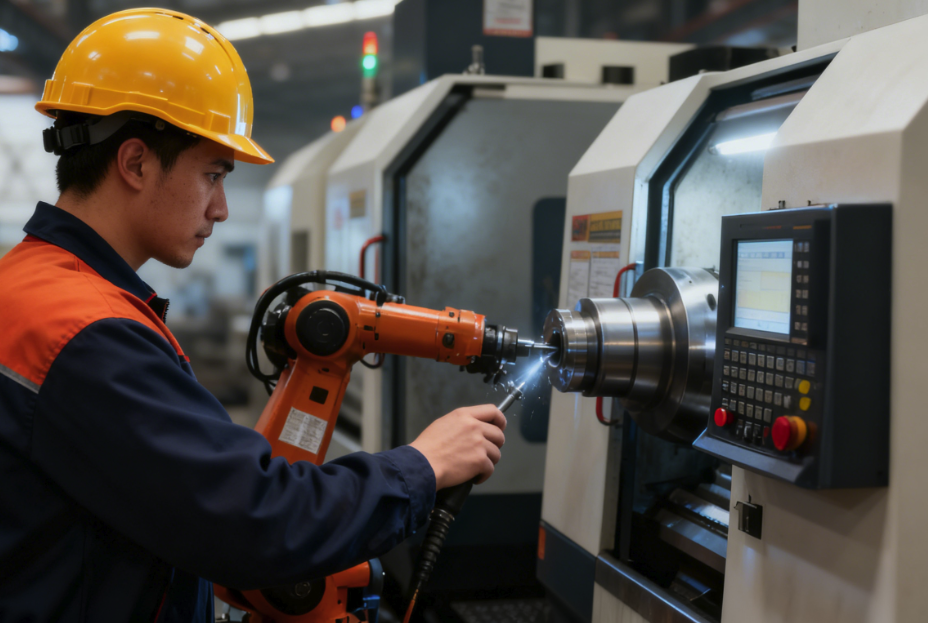
The availability of CNC machining service has led to the replacement of traditional technologies, marking the arrival of a new industrial era. We now need to consider whether precision machining will shape the future, how it will define the “micron-level” standard, and how CNC machining service are the driving force behind this precision revolution.
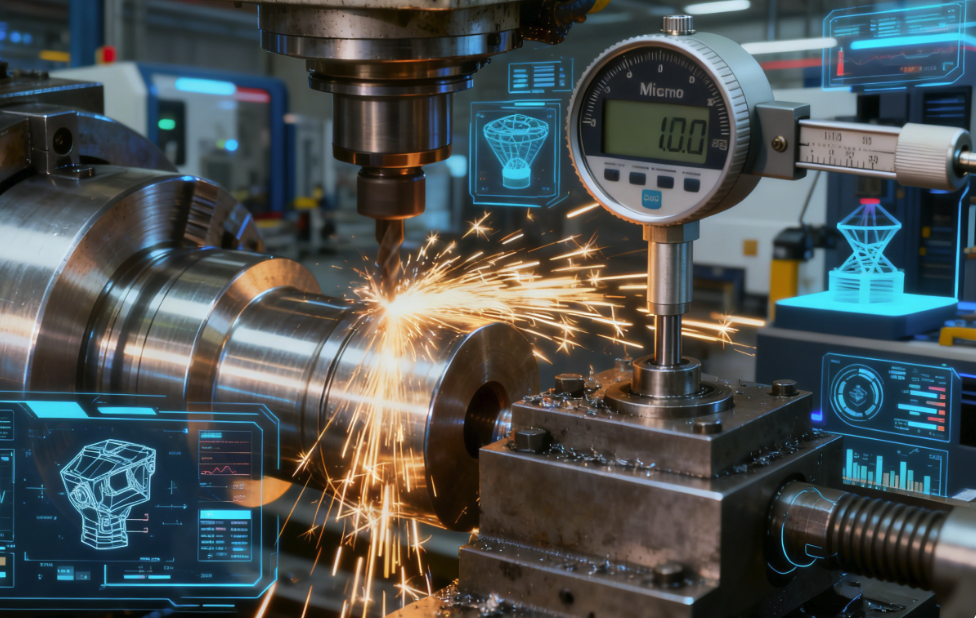
I.Precision machining is not simply a matter of accuracy; it is fundamental to the manufacturing industry.
Precision machining refers to the process of removing material from a workpiece to produce parts with extremely high tolerance accuracy and surface quality. Our traditional machining methods only achieve medium precision, but precision machining can reach extremely high accuracy, so even small deviations can lead to serious consequences.This precision is measured in micrometers, with one micrometer being equivalent to one-millionth of a meter. For comparison, the diameter of a human hair is typically about 50 la 100 micrometers. If we want to achieve a tolerance accuracy of a few micrometers, we need advanced equipment, experienced operators, and strict control at every stage of the manufacturing process. The benefit of precision machining is that it consistently ensures the uniformity of parts, which is crucial for critical industries.
II.CNC machining system
These services automate machine tools through computer programs, eliminating errors that can arise from manual operation. The programs for CNC machining services are created using CAD and CAM software, which control the precise movement of cutting tools with mathematical accuracy. This automation ensures that each part is identical to the last, which is beneficial for both mass production and custom manufacturing. Whether it’s milling, cotitură, drilling, or grinding, the capabilities of precision machining, enabling the creation of complex geometries that are impossible to achieve with traditional methods.
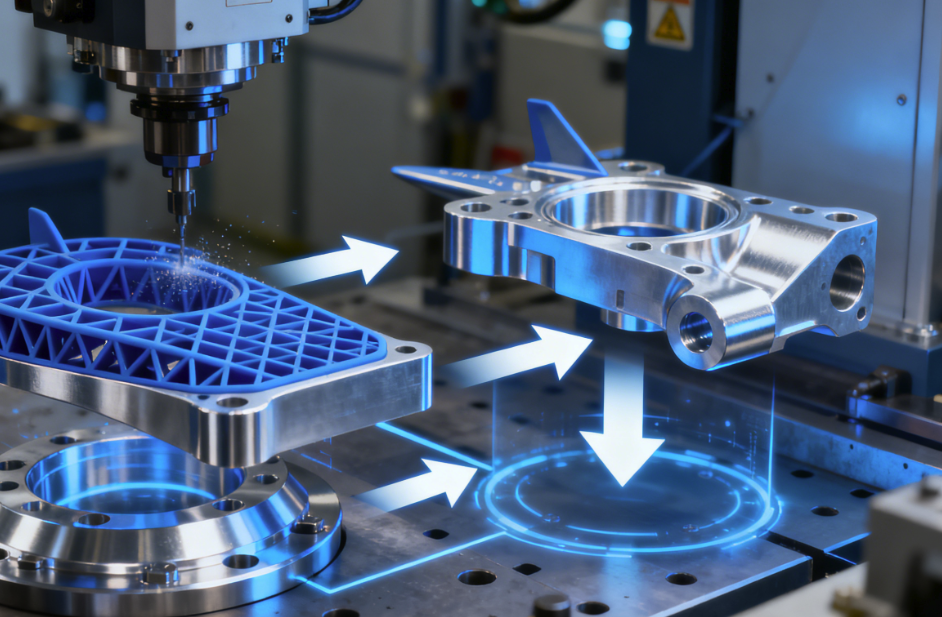
III. Applications of precision machining in various industries
(A) Aerospace Industry
In the aerospace industry, safety and performance are paramount, as is the need for lightweight, high-strength, and precisely dimensioned components. This precision machining technology, complemented by CNC machining services, enables the creation of complex parts such as turbine blades and engine components that must withstand extreme temperatures and pressures while maintaining their structural integrity. The micron-level precision achieved through CNC machining services makes the production of these components possible, ensuring the safety and reliability of aircraft. Without precision machining technology, many of today’s modern aerospace innovations would be impossible.
(B) Medical Device Industry
Medical implants such as artificial joints, dental implants, and pacemaker components require a perfect fit to ensure patient comfort and long-term efficacy. It can produce implants tailored to each patient’s unique anatomy and manufactured to precise specifications, a feat impossible with traditional manufacturing methods. Precision machining is also used to manufacture surgical instruments, which must be sharp, precise, and reliable to assist surgeons in performing complex procedures.
(C) Electronics Industry
The electronics industry is another field of precision manufacturing, and CNC machining services provide a powerful driving force for its most innovative developments. As electronic devices become smaller and more powerful, such as smartphones, laptops, and wearable technology, their internal components must also shrink in size while maintaining full functionality. Precision machining is ideally suited to manufacturing the tiny and complex parts, such as microchips, circuit boards, and connectors, that are crucial to the operation of these devices. These miniature components are manufactured with high precision to prevent electrical failures and ensure the performance of modern electronic products. The role of precision machining in electronics manufacturing will become increasingly important.
IV. Future Trends in Precision Machining and CNC Machining Services
(A) Integration of Artificial Intelligence and Machine Learning
The future of Prelucrare de precizie şi Serviciu de prelucrare CNC is being shaped by the integration of artificial intelligence (AI) and machine learning (ML). These technologies are being integrated into CNC machining services to enable real-time adjustments, predictive maintenance, and quality control. AI-driven CNC machining services can analyze data during the machining process, identify potential problems before they occur, and adjust parameters to maintain accuracy, thereby reducing downtime and increasing production efficiency. This integration also makes precision machining more accessible, as AI can handle complex programming tasks, allowing manufacturers to take on more complex projects without requiring specialized skills.
V. Conclusion
With the advanced technology provided by CNC machining services, we can produce components with micron-level precision, which has driven new developments in numerous fields such as aerospace, medical devices, electronics, and automotive industries. As technology continues to advance, we can expect to see even more exciting developments, from AI-driven automation to enhanced synergy with additive manufacturing. These advancements will further push the boundaries of what is possible, shaping the products of tomorrow and driving global manufacturing forward. For industries and manufacturers alike.