When we look at a groundbreaking medical device, a next-generation aerospace engine, or the sleek chassis of an electric vehicle, we tend to marvel at the big picture. We praise the software, the design, and the overarching brand. But if you strip away the outer shell, the reality becomes clear: modern innovation cannot exist without the microscopic perfection of componente metalice de înaltă precizie.
At Precision Metals Inc., we engineer the critical, high-tolerance parts that keep the world’s most demanding industries moving forward. But what exactly goes into manufacturing at this level, and why does a fraction of a millimeter make or break global supply chains? Let’s dive into the world of advanced metallurgy, micro-tolerances, and the relentless pursuit of perfection.
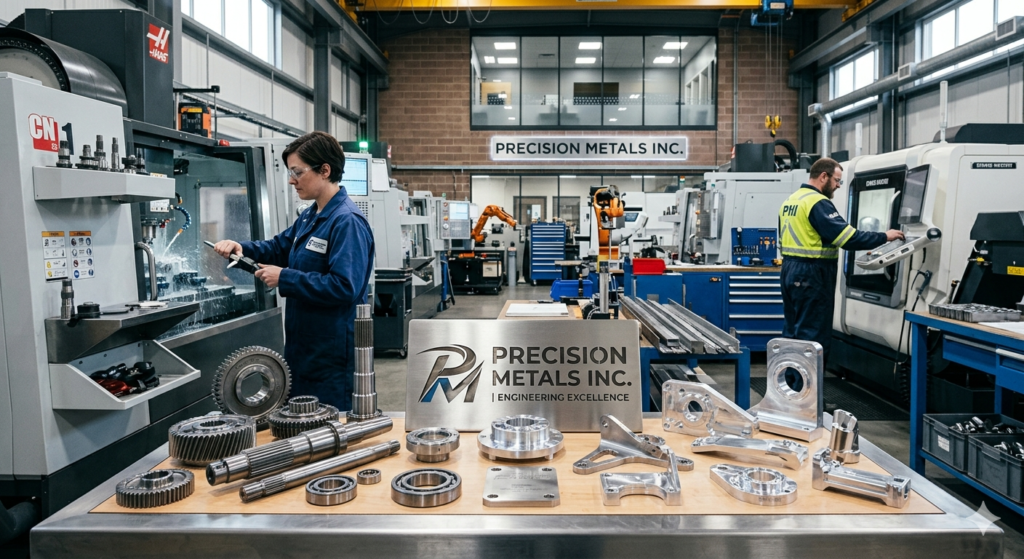
The Definition of High Precision: Moving Beyond Standard Machining
To the untrained eye, metal fabrication might look like a straightforward process of cutting, bending, and shaping. However, standard machine shops and high-precision facilities operate in completely different universes.
Standard manufacturing often measures success in fractions of an inch or millimeters. In contrast, crafting componente metalice de înaltă precizie requires working within micrometers (microns). To put that into perspective, a single human hair is roughly 70 microns wide. The team at Precision Metals Inc. routinely hits tolerances tighter than a fraction of that hair.
Achieving this level of accuracy demands more than just advanced CNC machines or Swiss lathes; it requires an ecosystem of controlled variables. Factors like ambient room temperature, cutting tool thermal expansion, and raw material grain structure must be meticulously managed. A 2-degree shift in shop temperature can cause metal to expand just enough to throw a component completely out of spec.
Why Industries Rely on Precision Metals Inc.
In mass production, “close enough” is a recipe for catastrophic failure. Different sectors have unique, non-negotiable standards for their components, and meeting those demands is where specialized expertise becomes invaluable.
1. Aerospace and Defense: Failure is Not an Option
Aerospace components face extreme environments—from freezing sub-zero atmospheric temperatures to the scorching heat of jet propulsion engines. A single fastening pin or valve component inside a fuel system must withstand immense pressure cycles. Our manufacturing processes ensure that every aerospace-grade component features flawless structural integrity and zero micro-fissures.
2. Medical Devices and Lifesaving Technology
The medical sector demands a completely different type of precision. Components used in robotic surgical arms, implants, or diagnostic machinery must not only be microscopic but also bio-compatible and perfectly smooth. Rough edges at a microscopic level can harbor bacteria or cause mechanical friction inside a patient’s body.
3. Semiconductor and Electronics
As microchips become smaller and more powerful, the machinery used to manufacture them requires unprecedented accuracy. The robotic arms and alignment tools inside semiconductor fabrication plants rely on custom metal parts that move with zero backlash and absolute repeatability.
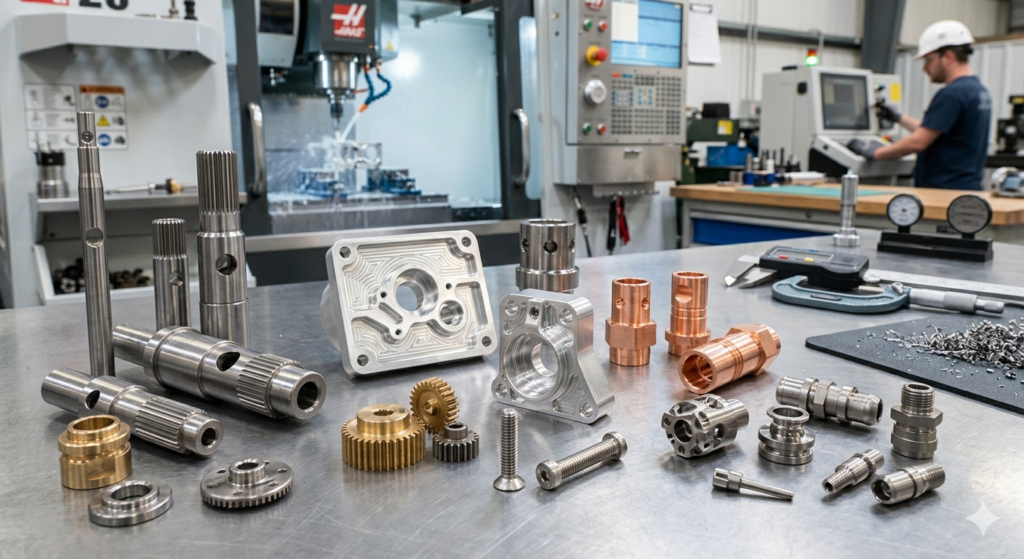
The Anatomy of Advanced Micro-Manufacturing
How does Precision Metals Inc. consistently deliver these ultra-precise results? It comes down to a blend of cutting-edge technology and human craftsmanship.
| Technology / Method | Primary Benefit | Ideal Application |
| Swiss CNC Turning | Exceptional stabilization for long, slender parts | Medical bone screws, miniature drive shafts |
| 5-Axis Milling | Machines complex geometries in a single setup, reducing human error | Aerospace impellers, turbine blades |
| EDM (Electrical Discharge Machining) | Uses electrical sparks to cut hard metals without mechanical force | Intricate molds, ultra-thin slots |
Beyond the machinery, material selection plays a massive role. Working with titanium, Inconel, Nitinol, and medical-grade stainless steel requires specialized tooling geometry and custom speeds and feeds. You cannot cut titanium the same way you cut aluminum; doing so ruins the tool and warps the metal.
The Human Factor in a Tech-Driven World
While automation and multi-axis machines do the heavy lifting, the human element remains irreplaceable. Programming a CNC machine to cut a complex part is a highly sophisticated form of digital craftsmanship.
Our engineers at Precision Metals Inc. analyze blueprints not just for how a part can be made, but how it can be made efficiently and scalably. Design for Manufacturing (DFM) reviews allow us to catch potential engineering flaws before a single piece of raw bar stock is loaded into a machine. This saves our clients thousands of dollars in wasted materials and development delays.
Moreover, our quality assurance team utilizes Coordinate Measuring Machines (CMM-uri) and optical comparators in climate-controlled labs to verify that the physical part matches the digital CAD model perfectly. If it isn’t flawless, it doesn’t leave our floor.
Looking Forward: The Future of Precision Manufacturing
The manufacturing landscape is evolving rapidly. With the rise of green energy, autonomous vehicles, and commercial space exploration, the demand for lighter, stronger, and more intricate parts is skyrocketing.
We are constantly investing in new technologies—from hybrid additive-subtractive manufacturing to AI-driven predictive maintenance for our machines—to ensure we stay ahead of the curve. Yet, our core mission remains unchanged: delivering uncompromised quality where it matters most.
If your next project requires the absolute highest standards of accuracy, reliability, and engineering expertise, you don’t have to navigate it alone. Get in touch with the engineering team at Precision Metals Inc. today, and let’s turn your complex designs into flawless reality.