In the rapidly evolving landscape of modern manufacturing, engineers and product designers are frequently faced with a pivotal question: 3D Printing vs CNC Machining: How to Choose the Right Process for Your Project?
As the demand for shorter development cycles and higher precision grows, selecting the optimal fabrication method becomes essential for both functional performance and cost-efficiency. Whether you are seeking Leading Industrial 3D Printing Services in China or partnering with a Leading CNC Machining Supplier for high-volume production, understanding the technical nuances between additive and subtractive manufacturing is the first step toward project success.
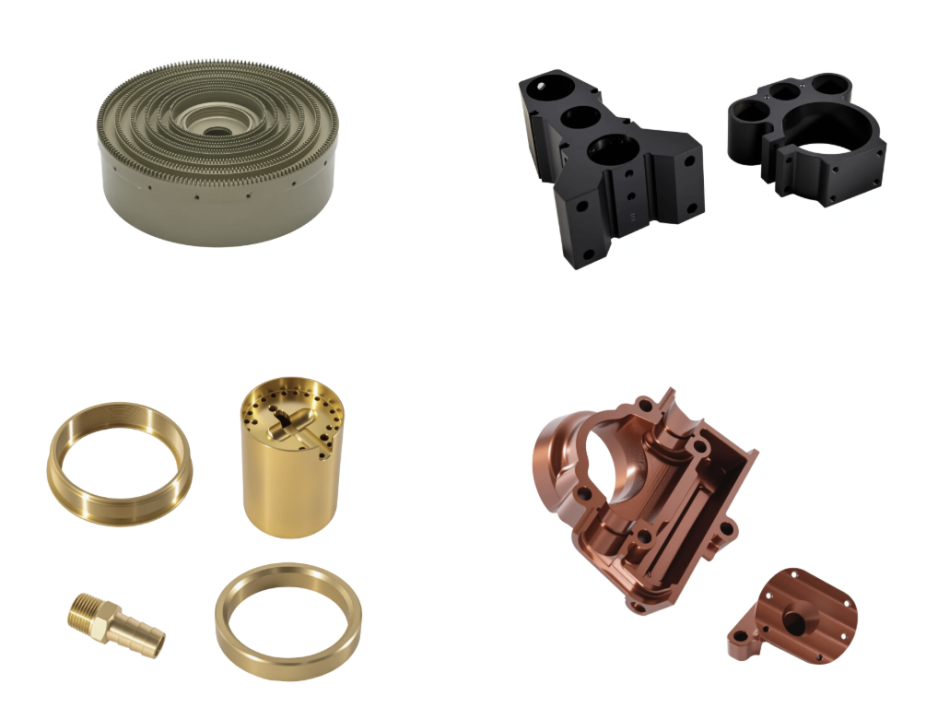
The Core Philosophy: Additive vs. Subtractive Manufacturing
At its fundamental level, the choice between these two technologies represents a choice between two different manufacturing philosophies. CNC (Computer Numerical Control) machining is a subtractive process. It begins with a solid block of material and uses high-speed cutting tools to remove layers until the final shape is achieved. Conversely, 3Baskı, or additive manufacturing, builds parts layer by layer from a digital file.
For companies like Diyot İşleme, which operates over 6,000 square feet of manufacturing space, these processes are not necessarily competitors but complementary tools. With over 15 years of experience in production and operation management, the industry has seen a shift where the “best” process is determined by the intersection of geometry, material requirements, and quantity.
Material Versatility: Metals, Plastics, and Composites
One of the most significant differentiators in the 3D Printing vs CNC Machining debate is the range and integrity of materials available. CNC machining is renowned for its ability to work with an extensive array of “real” production materials. From aerospace-grade Aluminum 6061 Ve 7075 to Stainless Steel 316, Titanyum, and high-performance plastics like PEEK or Teflon, CNC ensures that the final part possesses the exact mechanical properties required for the end-use environment.
In contrast, while industrial 3D printing has made massive strides in material science, it often utilizes proprietary resins or powders. While materials like Nylon (PA12) or certain metal powders used in SLS and DMLS are highly functional, they may not always match the isotropic strength of a CNC-machined part. However, for specialized rapid prototyping, 3D printing allows for the testing of multiple iterations in a fraction of the time, providing a fast track to verifying design intent before committing to expensive production materials.
Precision and Tolerance: The Quest for Absolute Accuracy
When projects demand extreme precision—such as those in the medical, aerospace, or automotive sectors—the technical parameters of the machinery become the deciding factor. CNC machining remains the gold standard for tight tolerances. Modern facilities equipped with 3-axis, 4-axis, and 5-axis CNC machines can routinely achieve tolerances as tight as +/- 0.005mm. This level of accuracy is critical for mechanical assemblies where fit and function are non-negotiable.
Diode Machining leverages more than 50 sets of advanced CNC machines to meet these rigorous standards. By integrating ISO9001-2015-certified quality control, the precision is not just a result of the hardware but a standardized process that ensures consistency across thousands of units. 3Baskı, while improving, typically offers tolerances in the range of +/- 0.1mm to 0.2mm. For components where surface finish and dimensional stability are paramount, the subtractive precision of CNC machining often provides the necessary competitive edge.
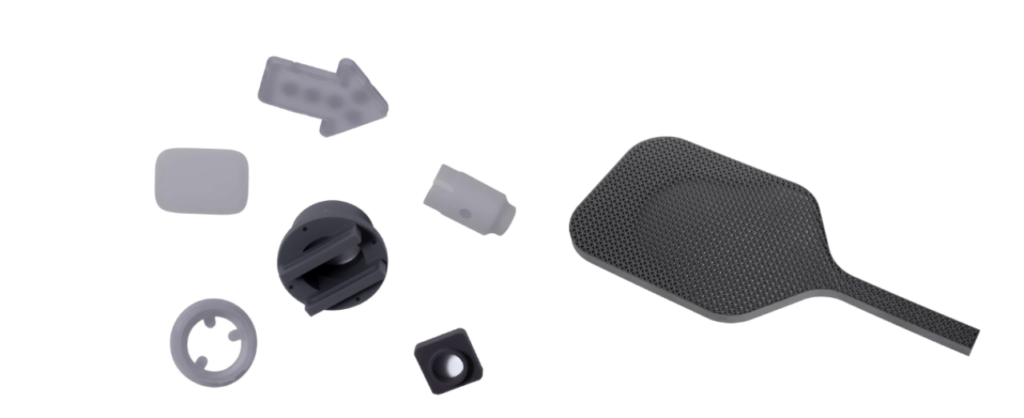
Geometric Complexity: Breaking the Constraints of Tool Paths
Where 3D printing truly shines is in the realm of “complexity for free.” Because additive manufacturing builds layer by layer, it can create internal structures, hollow chambers, and organic lattices that are physically impossible for a CNC cutting tool to reach. In traditional machining, the tool must have a clear path to the material it is removing. Even with advanced 5-axis capabilities, there are limits to undercuts and internal voids.
For product development teams, this means 3D printing is the superior choice for lightweighting components or creating consolidated assemblies that would otherwise require multiple parts. It allows for a level of design freedom that encourages innovation. However, Diode Machining’s team of experienced engineers often provides project feasibility analysis to bridge this gap. By utilizing large amounts of similar case data, they help customers optimize their designs so that even complex parts can be manufactured efficiently using high-speed CNC processes, balancing innovation with structural integrity.
Speed, Volume, and Cost: The Economic Equation
The decision often comes down to the bottom line: speed of delivery and total cost of ownership. For a single prototype or a handful of parts with complex geometries, 3D printing is almost always faster and more cost-effective because it requires no specialized tooling or complex setup.
However, as the quantity increases, the economic scale tips heavily in favor of CNC machining. Once a CNC program is optimized, the “per-unit” cost drops significantly. Diode Machining’s strategic location in a precision machining hub enables them to utilize an extensive supplier network, further optimizing production costs. For mass production, the ability to produce hundreds or thousands of parts with “competitive pricing + full order capacity support” makes CNC the logical choice for global clients in over 30 countries.
Surface Finish and Post-Processing
Surface quality is another critical technical parameter. CNC parts typically have an excellent “as-machined” finish, which can be further enhanced through bead blasting, anodizing, or electroplating. Since the parts are carved from a solid block, they do not exhibit the “stair-stepping” effect sometimes seen in 3D printed layers.
While high-end industrial 3D printing services offer various finishing options, they often require more intensive post-processing to reach a professional aesthetic or functional smoothness. For components that serve as the external face of a product or require a specific friction coefficient, the predictable surface morphology of CNC machining is a major advantage.
Integration of Services: From Design to Assembly
In the modern manufacturing ecosystem, a standalone service is rarely enough. Leading providers now offer comprehensive solutions. This includes not just the fabrication of parts, but also custom mechanical design, manufacturing, and assembly services for complex project analysis.
By combining advanced machinery with project feasibility analysis, companies like Diode assist clients from the initial material selection phase through to final quality control. This holistic approach ensures that whether a project starts as a 3D-printed proof-of-concept or moves directly into 5-axis CNC production, the transition is seamless. The goal is to deliver a solution that optimizes both performance and the client’s budget.
Conclusion: Making the Right Choice for Your Project
Ultimately, the choice between 3D Printing and CNC Machining is not about which technology is better, but which is better for your specific application. If your project requires rapid iteration, complex internal geometries, and low volumes, 3D printing is the ideal path. If you require superior material properties, tight tolerances, high-volume scalability, and a premium surface finish, CNC machining is the industry standard.
For global clients seeking a trusted partner who understands these complexities, the integration of 15 yılların deneyimi, ISO-certified quality, and a vast array of 3-axis to 5-axis machinery provides the necessary infrastructure to succeed. As manufacturing continues to advance, the most successful projects will likely be those that leverage the strengths of both worlds.
To learn more about optimizing your next project or to explore professional fabrication services, visit: https://diodemachining.com/