In the manufacturing world, precision isn’t just a goal—it’s the baseline. Whether you are scaling up a hardware startup or managing a massive automotive supply chain, finding the right custom sheet metal stamping process is what separates a flawless product from a costly recall.
But what actually goes into creating those perfect, repeatable metal components? And how do you choose between investing in a dedicated custom metal stamp for metal versus outsourcing the entire fabrication process?
Let’s dive deep into the mechanics of custom metal stamping, the technology behind the dies, and how to optimize your designs for maximum cost-efficiency.

What is Custom Sheet Metal Stamping?
Özel sac metal damgalama is a cold-forming manufacturing process that utilizes specialized dies and mechanical presses to transform flat metal sheets into specific, complex shapes. Unlike generic stamping, the “custom” element means the tooling is engineered exclusively for your unique part geometry.
The process typically involves several operations happening in sequence or all at once:
- Punching and Blanking: Cutting the raw outline or creating holes in the sheet metal.
- Bending: Shaping the metal along straight lines to create angles.
- Coining: Stamping the metal under intense pressure to reduce its thickness and impart highly precise features or surface textures.
- Embossing: Creating raised or sunken designs in the sheet.
Because the metal is formed cold, the final parts often boast higher tensile strength and a cleaner surface finish than those subjected to thermal shaping processes.
The Core of the Process: Choosing a Custom Metal Stamp for Metal
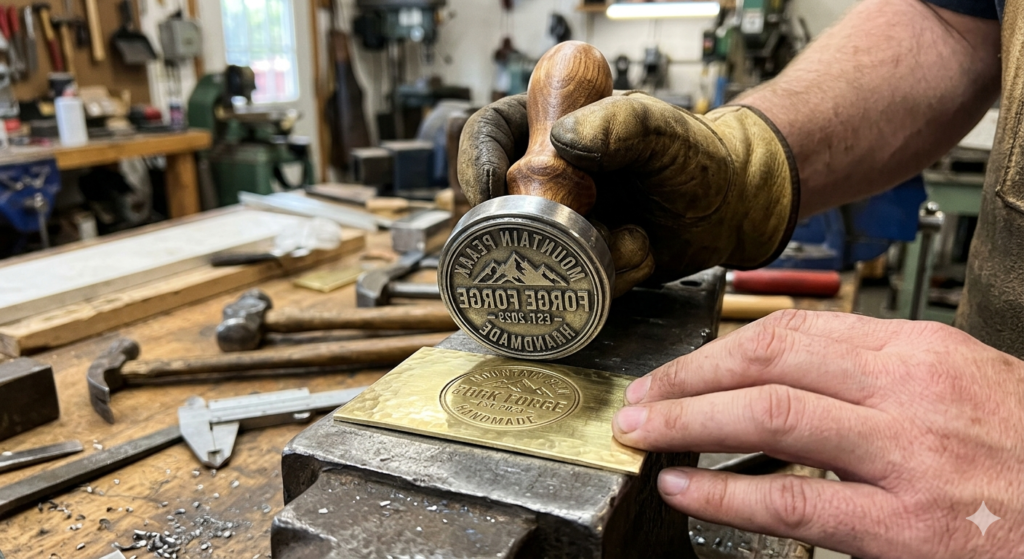
To achieve high-volume repeatability, engineers rely heavily on the tooling. Selecting the right custom metal stamp for metal production is the single most critical decision in the pre-production phase. The “stamp” or die acts as the mold, enduring thousands of tons of pressure over its lifespan.
There are three primary types of stamping dies used in the industry today:
1. Progressive Dies
If you need hundreds of thousands of parts, progressive die stamping is the gold standard. The raw metal strip feeds continuously through a single die station. With each stroke of the press, different operations (cutting, bending, punching) occur simultaneously at different stages. The final part drops out of the end of the machine fully formed.
2. Stage/Transfer Dies
For large, bulky, or highly complex parts, transfer dies are preferred. Instead of a continuous strip, individual blanks are transferred from one mechanical press station to the next using robotic arms or conveyor systems.
3. Compound Dies
When you need extreme precision on flat parts—such as washers or gears with internal holes—compound dies perform multiple cuts or punches in a single stroke. This eliminates the minor alignments errors that can happen when a part moves between stages.
Materials Matter: What Can You Stamp?
Not all metals behave the same way under a press. Your choice of material directly impacts the wear and tear on your custom metal stamp for metal, as well as the structural integrity of your final product.
| Malzeme | Key Benefits | Common Applications |
| Paslanmaz çelik | Exceptional corrosion resistance, high tensile strength. | Medical devices, aerospace, food processing. |
| Alüminyum | Lightweight, excellent strength-to-weight ratio, highly malleable. | Automotive panels, consumer electronics. |
| Copper & Brass | Superior electrical and thermal conductivity, spark-resistant. | Electrical connectors, terminals, plumbing. |
| Carbon Steel | Highly cost-effective, incredibly strong when heat-treated. | Structural brackets, heavy machinery. |
Designing for Success: How to Lower Production Costs
Achieving a low per-part cost in custom sheet metal stamping starts long before the press turns on. It begins on your CAD software. By applying Design for Manufacturability (DFM) principles, you can prevent your dies from wearing out prematurely and reduce material waste.
Keep Bend Radii Generous
Sharp corners look clean on a computer screen, but they are a nightmare for metal. Forcing sheet metal into a sharp 90-degree bend causes stress concentrations and cracking. As a rule of thumb, always keep the inside bend radius equal to or greater than the material thickness.
Mind the Hole Placement
If you punch a hole too close to a bend line or the edge of the sheet, the metal will distort during the forming process. Ensure holes are placed at a distance of at least two times the material thickness away from any bends.
Normalize Tolerances
While a custom metal stamp for metal can achieve incredibly tight tolerances, demanding perfection where it isn’t necessary will skyrocket your tooling costs. Reserve tight tolerances ($\pm 0.05 \text{ mm}$ or less) strictly for critical mating surfaces.
Why Invest in Custom Stamping Over Alternative Methods?
If you are debating between CNC machining, 3Baskı, laser cutting, or custom sheet metal stamping, the decision ultimately comes down to volume and speed.
While laser cutting and CNC machining require zero upfront tooling costs, their per-part production time is slow. Stamping, on the other hand, requires a significant initial investment in the custom die. However, once that die is built, parts can be stamped out every single second.
The Verdict: If your production run is over 5,000 units, the upfront cost of a custom metal stamp will quickly pay for itself, yielding the lowest per-part cost available in modern manufacturing.
Conclusion: Partnering with the Right Manufacturer
The success of your project hinges on the expertise of your manufacturing partner. When sourcing custom sheet metal stamping services, look for a supplier that offers in-house tool and die design. A partner who can simulate the metal flow using advanced software before cutting the physical die will save you thousands of dollars in revisions and weeks of delays.
Are you ready to bring your next hardware project to life? Focus on optimizing your design for the press, choose the right alloy, and invest in a high-grade custom stamp to ensure your production run is seamless, scalable, and highly profitable.