If you’re in the CNC machining industry, you know how frustrating it is to spend hours on processing, only to find that a batch of parts fails the inspection. The pass rate of cnc precision parts directly affects the company’s efficiency and profits, and many people ignore a key point——the right precision measurement tools can solve most of the troubles.
Heute, I won’t talk about those rigid professional terms. I’ll share some real experiences from the workshop, telling you how to use these tools to improve the pass rate easily. Whether you’re a veteran operator or a newbie who just entered the industry, you can understand it at a glance.
Erste, let’s figure out: Why do cnc precision parts often fail?
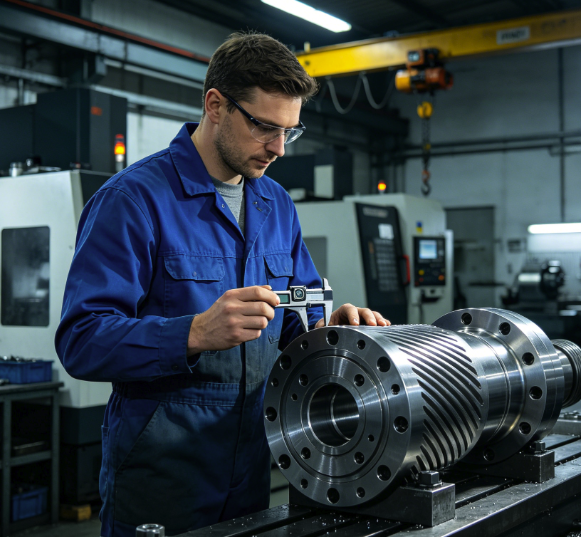
Many people think that the failure is due to the low precision of the CNC machine tool, but in fact, 60% of the unqualified products are caused by “inaccurate detection” rather than “inaccurate processing”. Let me give you an example. A friend of mine runs a small machining workshop. He used to rely on manual calipers to detect parts. Once, he processed 500 cnc precision parts, Und 80 of them were unqualified after delivery. Later, he found out that the calipers he used had a slight error, and the parts that he thought were qualified were actually out of the tolerance range.
Another situation is that during the processing, the tool wears a little, which leads to the size deviation of the parts. But because there is no real-time detection tool, it is not found until the whole batch is processed, resulting in a lot of waste. So it’s not that the CNC machine tool is not good, nor that the operator is not careful, but that we lack a reliable “inspector”——precision measurement tools.
Not all measurement tools are useful: Choose the right one to avoid doing useless work
When it comes to precision measurement tools, many people think of calipers and micrometers. These tools are cheap and easy to use, but they are only suitable for simple size detection. For cnc precision parts with high requirements, such as those used in aerospace or medical equipment, these manual tools are far from enough.
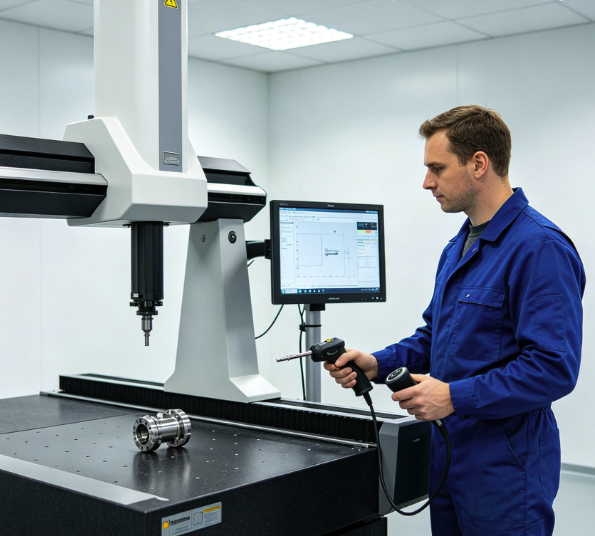
I have seen a workshop that processes precision parts for 5G equipment. They used to use ordinary micrometers, and the pass rate was always around 85%. Later, they replaced with professional precision measurement tools such as coordinate measuring machines (CMM), and the pass rate directly increased to 98%. The reason is very simple: the tolerance of these cnc precision parts is often less than 0.005mm, and manual measurement can’t avoid human error, but professional tools can detect the size accurately and quickly.
Of course, you don’t have to buy the most expensive one. You should choose according to your own processing needs. If you process ordinary precision parts, a digital display micrometer with high precision is enough; if you process high-precision parts, you can consider tools like spindle test bars or machine tool probes, which can not only detect the finished products, but also monitor the processing process in real time.
Use precision measurement tools correctly: It’s not just “measure once”
Buying good tools is only the first step. The key is to use them correctly. Many operators just measure the size after processing the parts and think it’s okay. In fact, the correct way is to use precision measurement tools throughout the whole processing process.
Erste, before processing, use the tool to detect the raw materials and the fixture. Zum Beispiel, use a spindle test bar to check the precision of the machine tool spindle, so as to avoid the size deviation caused by the spindle problem. Zweite, during processing, take samples for detection every once in a while. Zum Beispiel, when processing a batch of cnc precision parts, detect one every 10 pieces. If there is a deviation, adjust the machine tool in time, so as to avoid batch unqualified. Endlich, after processing, conduct a full inspection of the finished products to ensure that every part delivered is qualified.
There’s also a small detail that many people ignore: the environment of the measurement. Precision measurement tools are very sensitive to temperature and humidity. If you measure in a workshop with large temperature changes, the tool itself will have errors, which will affect the detection results. So it’s best to set up a special measurement area, keep the temperature and humidity stable, and the detection results will be more accurate.
Real case: How a small workshop improved the pass rate by 15%
Let me share a real case I witnessed. A small workshop that processes auto parts used to have a pass rate of only 82% for cnc precision parts, and the waste of materials and time made the boss very distressed. Later, under the suggestion of a technical consultant, they did two things: first, replaced the old manual measurement tools with professional precision measurement tools, including a digital display caliper with a precision of 0.001mm and a small coordinate measuring machine; second, trained the operators to use these tools correctly, and formulated a strict detection process.
After only one month, the pass rate of their cnc precision parts rose to 97%, and the waste of materials was reduced by 60%. The boss said that he used to think that buying precision measurement tools was a waste of money, but now he found that it was the most cost-effective investment. Because the cost saved by reducing unqualified products is far more than the cost of buying tools.
Final words: Precision measurement is the key to improving the pass rate
In the CNC machining industry, “precision” is the core. Whether it’s the precision of the machine tool, the precision of the tool, or the precision of the detection, they are all closely related to the pass rate of cnc precision parts. Many people spend a lot of money on upgrading machine tools and tools, but ignore the investment in precision measurement tools, which is actually putting the cart before the horse.
Professional precision measurement tools are not only a “detector” for unqualified products, but also a “guardian” for the processing process. They can help us find problems in time, avoid waste, and improve the pass rate and production efficiency. If your workshop is also troubled by the low pass rate of cnc precision parts, you might as well try to use professional precision measurement tools. I believe you will get unexpected results.
Remember, in the field of precision machining, there is no such thing as “almost qualified”. Only by using professional tools to detect every detail can we ensure that every cnc precision part meets the requirements, and can we gain an advantage in the fierce market competition.