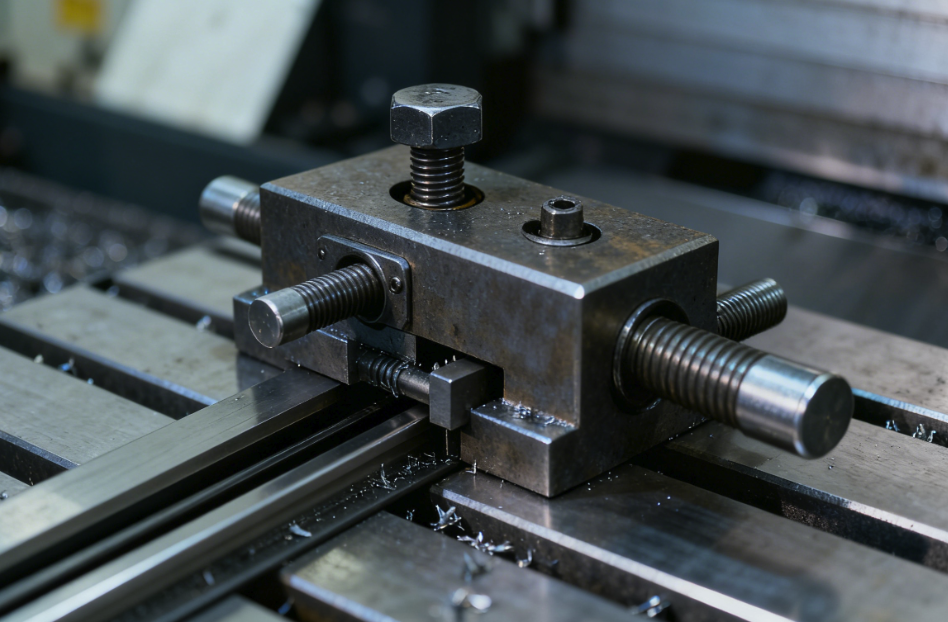
Usinage de précision is fundamental to producing high-quality molds. Every small detail during the machining process directly determines the final quality of critical parts such as mold cores and cavities.
Whether it’s a manufacturer of metal or plastic molds, achieving micron-level dimensional accuracy (much finer than a human hair) is a constant goal.
Many factors influence precision machining – such as advanced CNC equipment, effective cutting tools, skilled operators, and optimized machining parameters – but effective and suitable tooling and fixtures are absolutely the most basic and crucial element.
A stable and well-designed tooling and fixturing solution not only ensures that batches of mold parts are machined identically but also directly improves the dimensional accuracy of cores and cavities, helping Chinese factories secure more high-end orders in the fiercely competitive global market.
Therefore, whether you are machining high-hardness metal mold cores or precision plastic mold cavities, getting the right professional tooling and fixtures is the first step towards achieving stable and precision machining!
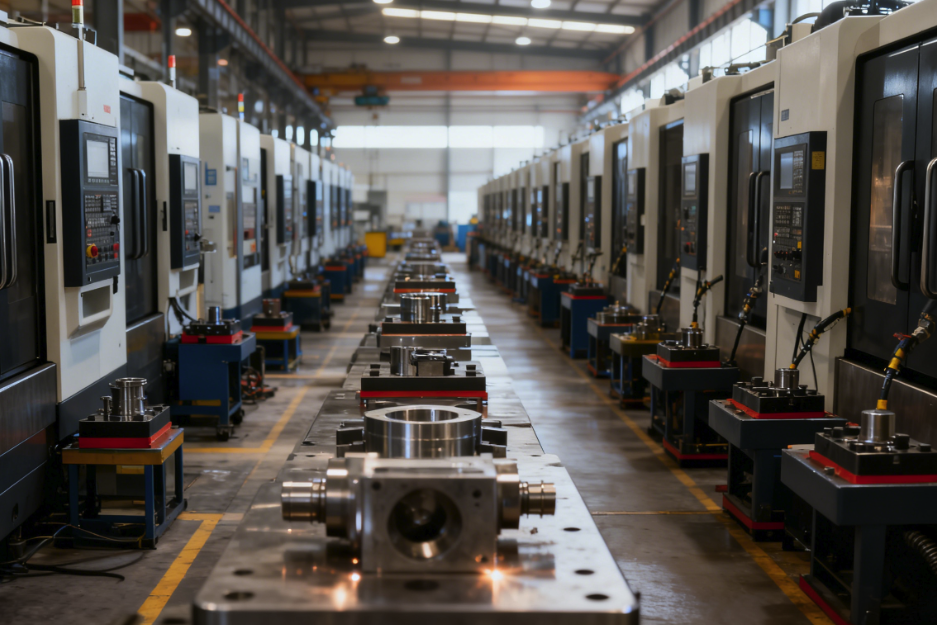
1. The Core Link Between Fixturing and Precision Machining in Mold Processing
Precision machining relies on advanced equipment, cutting tools, and processing techniques, while tooling and fixtures are essential for ensuring that all aspects function optimally. The core and cavity components within a mold directly determine the final product’s appearance and dimensional accuracy – even the slightest deviation can render the entire mold unusable. Whether you’re using metallic materials like H13 steel or S136 stainless steel, or plastic mold blanks like POM or PC, if the tooling and fixtures are not stable, the workpiece is prone to shifting, deforming, or even vibrating during processing.This not only results in rough and uneven surface finishes on the parts, but also causes deviations in critical dimensions such as inner diameter, outer diameter, and depth, ultimately failing to meet the assembly requirements of precision molds.
We are a Chinese mold factory specializing in precision machining, and optimizing tooling and fixtures is our core advantage.A set of custom-made fixtures can firmly secure the workpiece, controlling the repeatability error to within 0.005 millimeters – this precision is the solid foundation for our precision machining capabilities.Compared to general-purpose fixtures, the difference is significant: general-purpose fixtures are not as stable when dealing with irregularly shaped parts; while custom fixtures are designed entirely according to the unique shape of the mold core and cavity, maximizing the contact area between the fixture and the workpiece and minimizing deformation during clamping.This is especially crucial for thin-walled mold cavities! Because excessive clamping force can easily cause permanent deformation, directly affecting the accuracy of subsequent precision machining.
2. How Stable Fixturing Boosts Mold Core and Cavity Accuracy for Metal & Pièces en plastique
2.1 Eliminate Processing Vibration to Ensure Dimensional Stability
In the high-speed cutting process of precision machining, the force generated when the cutting tool interacts with the workpiece can easily cause vibrations, especially if the workpiece is not securely fixed.
If the workpiece is a metal mold core requiring high hardness and wear resistance, vibrations will leave clear tool marks on the part’s surface, shortening the mold’s lifespan and causing dimensional deviations in critical areas.If the workpiece is a plastic mold cavity that directly contacts the injection-molded product, vibrations will affect the smoothness of the cavity surface, resulting in flow marks, pitting, and other defects on the final injection-molded product.
A stable fixture can effectively absorb the vibrations generated during cutting, ensuring that the workpiece remains in a fixed position relative to the machine tool throughout the entire machining process. This guarantees that the dimensional accuracy and surface quality of the mold parts meet the required standards.In actual precision machining, Chinese factories typically use high-rigidity materials such as alloy steel for fixtures to better resist the forces generated during cutting and reduce vibration transmission.
For example, when machining metal mold cores with complex curved surfaces, hydraulic fixtures can be used. These fixtures can clamp the workpiece evenly from multiple directions, ensuring that the workpiece does not shift or vibrate during high-speed milling.With this stable clamping environment, CNC machine tools can fully utilize their precision machining capabilities and achieve the required micron-level accuracy.
2.2 Improve Repeat Positioning Accuracy to Realize Batch Consistency
For factories that mass-produce mold parts, repeatable positioning accuracy is a critical indicator of precision machining. During production, many identical workpieces must be processed, and each piece must have exactly the same dimensions so that the core and cavity of the mold can fit together perfectly.
A good set of tooling and fixtures ensures that each workpiece is positioned in exactly the same location on the machine tool, preventing cumulative errors caused by inaccurate manual positioning or inconsistent clamping force. This is especially important for the matching processing of the core and cavity – only when the precision of each part is consistent can the mold be perfectly assembled, ensuring the quality of the manufactured products and reducing the time and cost of subsequent mold adjustments.
In the precision machining of mass-produced mold parts, domestic factories generally use modular fixturing systems. This type of fixture allows for quick replacement of fixtures corresponding to different workpieces while maintaining high repeatable positioning accuracy. This not only improves processing efficiency but also ensures consistent quality across a batch of workpieces. For example, to process 100 sets of plastic mold cores and cavities, using a modular fixture system allows all workpieces to be clamped and fixed in a short time, and the repeatable positioning error can be controlled within 0.003 millimeters, fully meeting the requirements of high-precision machining.
2.3 Adapt to Complex Shapes to Meet Custom Processing Needs
With increasingly diversified market demands, the shapes of mold components such as cores and cavities are becoming more complex – featuring more curved surfaces, undercuts, and thin-walled structures. This places higher demands on the fixtures used in precision machining.
Traditional general-purpose fixtures often fail to provide stable clamping for these complex-shaped parts, resulting in either substandard machining accuracy or even damage to the workpiece.
Domestic professional mold manufacturers can design and customize fixtures based on the shape, size, and material of the workpiece. Whether it’s an irregularly shaped metal part with multiple curved surfaces or a thin-walled plastic part prone to deformation during clamping, they can provide suitable solutions.
These customized fixtures for precision machining can be manufactured using 3D printing or CNC machining technology, ensuring a perfect fit between the fixture and the workpiece.
For example, when machining thin-walled plastic mold cavities with complex internal chambers, a fixture with a softer contact surface can be designed. This prevents excessive clamping force from deforming the part while ensuring stable workpiece positioning during machining.
This not only improves the machining accuracy of mold cores and cavities but also expands the factory’s precision machining capabilities, allowing them to meet the customized machining needs of various clients in industries such as automotive, electronics, and medical devices.
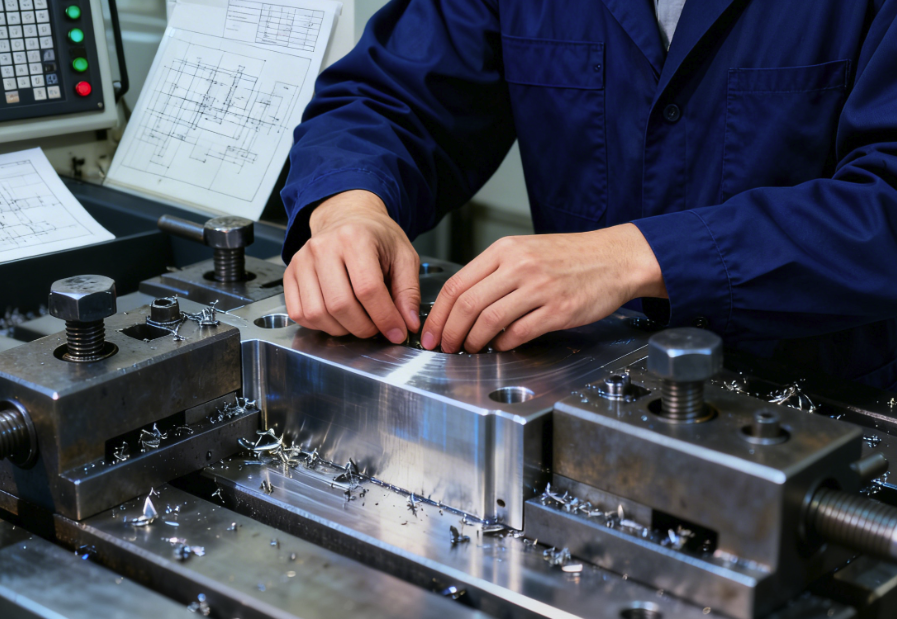
3. Chinese Factory’s Fixturing Solutions for Precision Machining of Mold Parts
As a professional Chinese factory focusing on precision machining of metal and plastic mold parts, we have accumulated rich experience in fixturing optimization over the years. We deeply understand that different materials and processing requirements need different fixturing schemes, and there is no one-size-fits-all solution in the field of precision machining. For hard metal mold cores such as H13 and S136, which require high clamping force to resist cutting vibration, we use high-strength hydraulic clamps or pneumatic clamps to ensure firm fixation; for fragile plastic mold blanks or thin-walled metal parts, we adopt flexible clamping methods such as vacuum suction or magnetic clamping to avoid workpiece deformation.
In addition, we integrate fixturing design into the entire precision machining process, from the initial quotation stage to the final delivery of parts. Before processing, our experienced engineers will conduct a comprehensive analysis of the workpiece drawings, including material characteristics, shape complexity, dimensional accuracy requirements, and processing procedures, and formulate the most suitable fixturing scheme. During the processing process, we will continuously monitor the clamping state and processing results, and optimize the fixturing scheme in a timely manner if any problems such as vibration or deformation are found. This integrated service not only improves the processing accuracy of mold cores and cavities but also shortens the delivery cycle, helping customers reduce costs and improve efficiency.
We also provide fixturing customization services for customers with special precision machining needs. Whether you need a single customized fixture for a prototype mold or a set of modular fixturing systems for mass production, our engineering team can design and manufacture it according to your requirements. All our fixtures are tested for clamping stability and repeat positioning accuracy before leaving the factory to ensure that they can meet the high standards of precision machining.
4. Case Study: How Fixturing Optimization Improved Precision Machining Accuracy for a Metal Mold Core Project
To further illustrate the importance of fixturing in precision machining, we would like to share a successful case from our factory. A customer in the automotive industry needed to process a batch of H13 steel mold cores with a dimensional accuracy requirement of ±0.002mm. Initially, the customer used a universal vise for clamping, but during processing, the workpiece vibrated seriously, resulting in dimensional deviations of up to 0.01mm, which failed to meet the requirements.
After receiving the customer’s request for help, our engineering team immediately conducted a detailed analysis of the workpiece and processing parameters. We found that the main reason for the low accuracy was the unstable clamping of the universal vise, which could not resist the cutting force during high-speed milling. To solve this problem, we designed a customized hydraulic fixture for the mold core, which increased the contact area between the fixture and the workpiece by 30% and provided uniform clamping force from four directions. In addition, we added a vibration-damping pad between the fixture and the machine tool worktable to further reduce cutting vibration.
After adopting the new fixturing scheme, the precision machining accuracy of the mold core was significantly improved. The dimensional deviation was controlled within ±0.0015mm, fully meeting the customer’s requirements. At the same time, the processing efficiency was increased by 20% because there was no need for repeated adjustment and rework due to dimensional deviations. This case not only helped the customer solve the precision machining problem but also established a long-term cooperative relationship between us. It fully proves that good fixturing is indeed the foundation of precision machining and can directly boost the accuracy of mold cores and cavities.
5. Conclusion: Choose the Right Fixturing, Lay the Foundation for Precision Machining
In the field of mold processing, precision machining is the key to improving product quality and market competitiveness, and good fixturing is the foundation of precision machining. Stable fixturing directly affects the dimensional accuracy, surface quality, and batch consistency of mold cores and cavities, and is related to the final performance of the mold and the economic benefits of the factory. With the continuous development of the global manufacturing industry, the requirements for precision machining are getting higher and higher, and the importance of fixturing will become more and more prominent.
If you are looking for a reliable Chinese factory that focuses on precision machining and has professional fixturing solutions, we are your best choice. We have advanced CNC processing equipment, a team of experienced engineers, and a complete fixturing design and manufacturing system. We can provide you with one-stop services from fixturing design and customization to mold part precision machining, ensuring that every mold core and cavity meets your high-precision requirements. Whether you need to process metal mold parts, plastic mold parts, or custom complex-shaped parts, we can tailor the most suitable solution for you. Contact us now to discuss your custom processing needs and let us help you achieve higher precision machining levels!