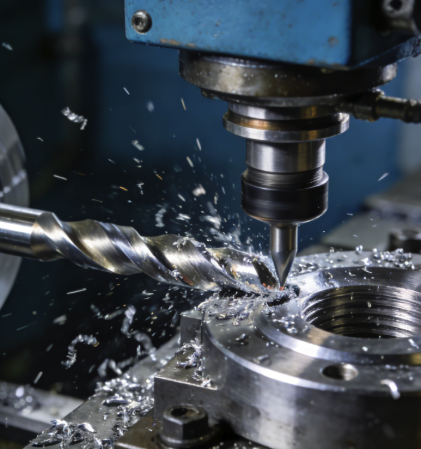
If you are involved in product development, you have undoubtedly already considered how to efficiently transform design concepts into physical prototypes. Today, we compare rapid prototyping services with traditional prototyping methods—including a look at rapid prototyping via CNC machining—to help you select the solution best suited for your project.Cost: It Depends on Your Project Size
A lot of people think rapid prototyping is more expensive, but that’s not always true. For small batches or one-off prototypes, rapid prototyping (including cnc machining rapid prototyping for more precise parts) is way cheaper. You don’t have to pay for expensive molds or extra labor—just the material and the machine time.
Traditional prototyping can be cheaper if you’re making hundreds or thousands of the same prototype. Molds are expensive upfront, but once you have them, churning out parts is cheaper per unit. But if you’re just testing a design or making a small number of prototypes, traditional methods will cost you more in time and money.
Precision: Both Can Deliver, But in Different Ways
If you need super precise parts—like for medical devices or aerospace components—cnc machining rapid prototyping is your best bet. It’s accurate, consistent, and can handle tough materials like metal or high-grade plastic. Rapid prototyping with 3D printing is precise too, but it’s better for less demanding parts.
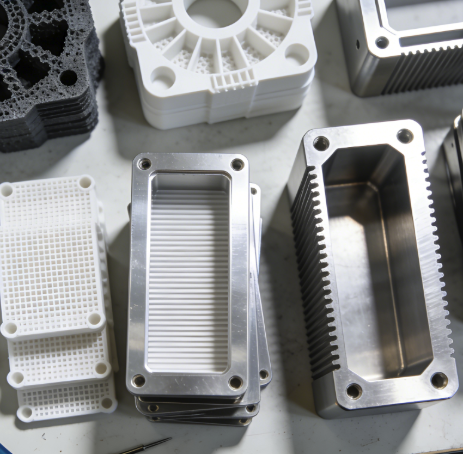
If you’re in product development, you’ve probably wondered how to turn your design ideas into physical prototypes efficiently. Today, we’re comparing rapid prototyping services and traditional prototyping—plus, we’ll touch on cnc machining rapid prototyping—to help you pick the right one for your project. No jargon, just straight talk about what works best for different scenarios.
First, Let’s Break Down the Basics (No Tech Overload, Promise)
The essence of rapid prototyping lies in “speed”—more precisely, in the swift creation of prototypes using technologies such as 3D printing or CNC machining. Traditional prototyping, by contrast, adheres to time-honored methods—such as manual modeling, mold making, or manual machining. Although both approaches are capable of achieving the desired objective, they differ significantly in their specific workflows and underlying logic.
Speed: Rapid Prototyping Wins (Hands Down)
Let’s be real—time is money, especially in product development. With rapid prototyping services, you can go from a digital design to a physical prototype in days, sometimes even hours. Need to tweak the design? No problem—just adjust the digital file and print a new one in no time.
Traditional prototyping can be precise too, but it depends on the skill of the person making the prototype. Hand-carved parts might have small variations, which can be a problem if you need every prototype to be identical. For precision-focused projects, rapid prototyping (especially CNC-based) is more reliable.
Flexibility: Rapid Prototyping Lets You Experiment
One of the best things about rapid prototyping services is how flexible they are. Want to test three different design ideas? Print all three prototypes in a few days and compare them. Made a mistake in the design? Fix it in the digital file and print a new one—no wasted materials or time.
Traditional prototyping is rigid. Once you make a mold or start handcrafting, changing the design is a hassle. You might have to throw away the mold or start over, which is frustrating and costly. If you’re still in the experimentation phase, rapid prototyping is the way to go.
So, Which Is Better? The Short Answer
There’s no one-size-fits-all answer. If you need speed, flexibility, or precise small-batch prototypes, rapid prototyping services (including cnc machining rapid prototyping) are better. If you’re making large quantities of the same prototype and have time to invest in molds, traditional prototyping might be cheaper in the long run.
Most businesses these days use a mix—rapid prototyping for testing and iterating, then traditional methods for mass production. В конце дня, it’s about what fits your project timeline, budget, and quality needs. Don’t overcomplicate it—pick the method that gets your prototype done right, fast, and within budget.