 Skip to content
 If you’re in the manufacturing or product development space, you’ve probably heard of rapid prototyping machines and rapid prototyping cnc machining—but maybe you’re not 100% sure how they work together, or why they’re so game-changing for businesses of all sizes. Let’s break this down in simple terms, no fancy jargon—just real talk about what these tools do and how they can help you.
What Even Are Rapid Prototyping Machines, Anyway?
First off, let’s get rid of the confusion around rapid prototyping machines. They’re not some super complex, unattainable piece of equipment—think of them as “fast prototyping tools” that turn digital designs into physical objects in a fraction of the time it would take with traditional methods. Back in the day, if you wanted to make a prototype, you’d have to hand-carve it, use molds, or wait weeks for a machine shop to put something together.
The best part? They’re flexible. Whether you’re working with plastic, metal, or even composite materials, most rapid prototyping machines can handle it. I’ve seen small businesses use them to test out new phone cases, while larger manufacturers use them to prototype parts for cars or medical devices. They’re not just for “big guys”—they’re for anyone who wants to turn an idea into something tangible without wasting time or money on flawed designs. And here’s the kicker: they work seamlessly with rapid prototyping cnc machining, which we’ll get to in a minute.
One common myth I hear is that rapid prototyping machines are “low quality” because they’re fast. That couldn’t be further from the truth. Modern machines are precise enough to create prototypes that look and function just like the final product. You can test fit, test durability, and even show the prototype to clients or investors—all before you commit to mass production. It’s a game-changer for reducing risk, because you can catch design flaws early, instead of after you’ve spent thousands on tooling or production.
How Rapid Prototyping CNC Machining Fits Into the Picture
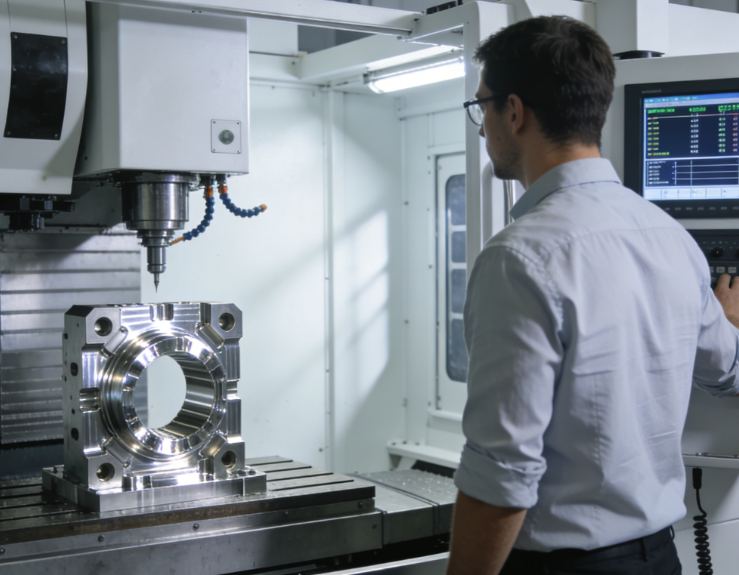
Now, let’s talk about rapid prototyping cnc machining. If rapid prototyping machines are the “fast creators,” CNC machining is the “precision finisher.” Here’s how it works: once your rapid prototyping machine creates a basic prototype, CNC machining steps in to refine it, add details, and make sure it’s perfectly aligned and smooth. Think of it like baking a cake—rapid prototyping is mixing the batter and putting it in the oven, and CNC machining is frosting it, adding decorations, and making sure it looks and tastes perfect.
A lot of people think you have to choose one or the other, but that’s not the case. Using both together gives you the best of both worlds: speed from the rapid prototyping machine, and precision from the CNC machining. Another thing to note: rapid